Skip to content
Jad El Badaoui

Aerospace · CFD · Structures · Computational methods

Jad El Badaoui

Aerospace engineer working across CFD, fluid-structure interaction, composite structures and high-performance computing.

Most of what I do is about whether a result holds up once it is checked, not just whether it converged. In practice that means separating verification from validation, comparing solver output against hand calculations, and stating what a model cannot tell you.

01 / Selected engineering work

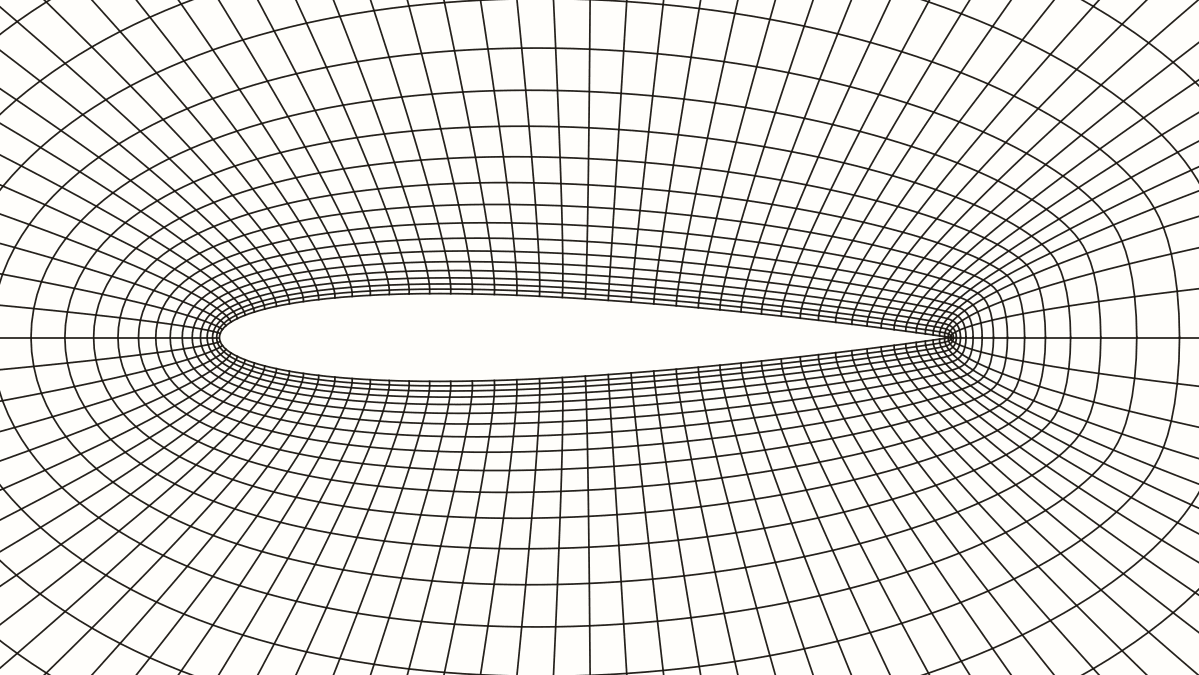
CFD pressure contours around a NACA 0012 aerofoil

01 · CFD · Multiphysics

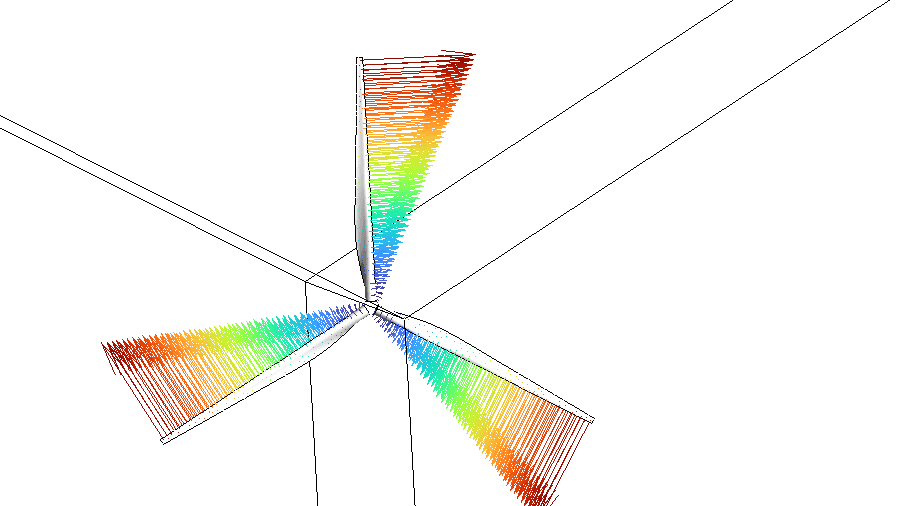
Aerospace CFD & FSI

Validated NACA 0012 aerodynamics and a one-way coupled wind-turbine fluid-structure interaction study in ANSYS Fluent and Mechanical, with formal verification and validation throughout.

1.4 %
Lift vs experiment
0.116 %
Root reaction vs hand calc
0.405 m
Blade tip deflection

Read the case study

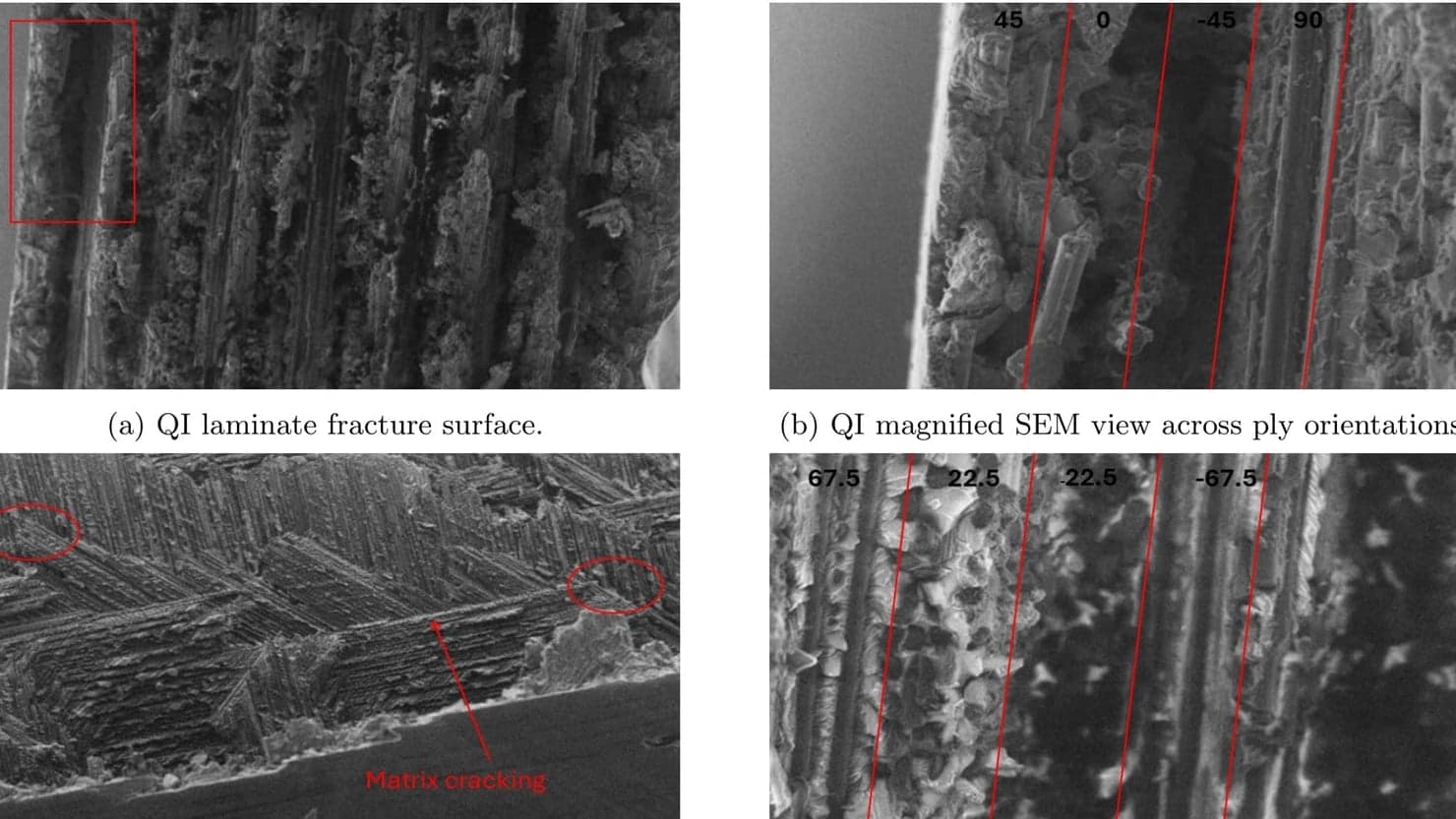
Scanning electron microscope image of a composite laminate fracture surface

02 · Composites · FEA · Experiment

Thin-Ply Composite Analysis

Experimental, analytical and finite-element investigation of thin-ply quasi-isotropic and Double-Double laminates: four architectures manufactured and tested, a ply-by-ply 3D Abaqus free-edge model, and statistics that decide the result.

4 × 32-ply
Laminates manufactured
496 to 538 MPa
Failure stress range
45 to 254 J/m²
O'Brien energy release rates

Read the case study

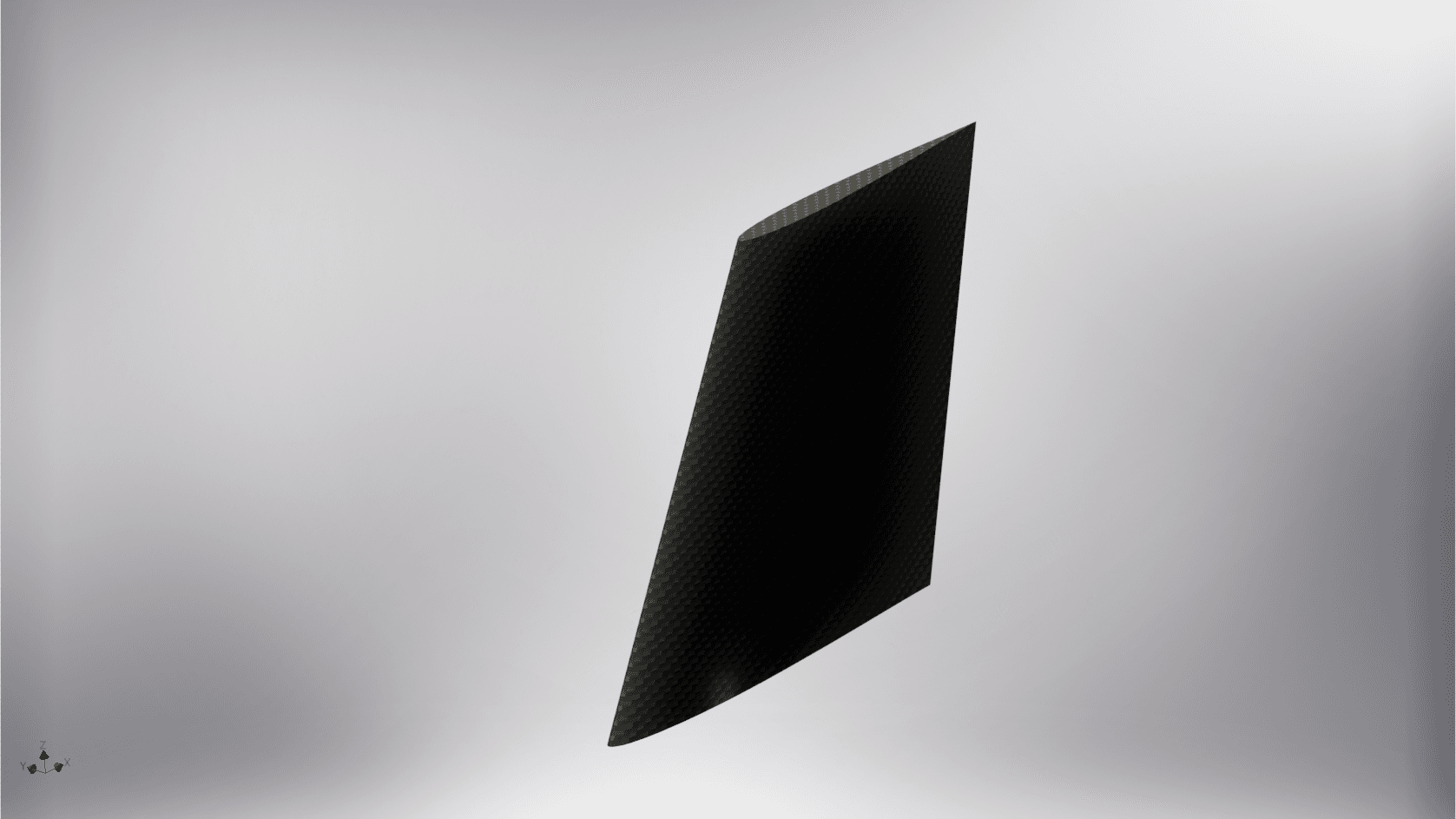
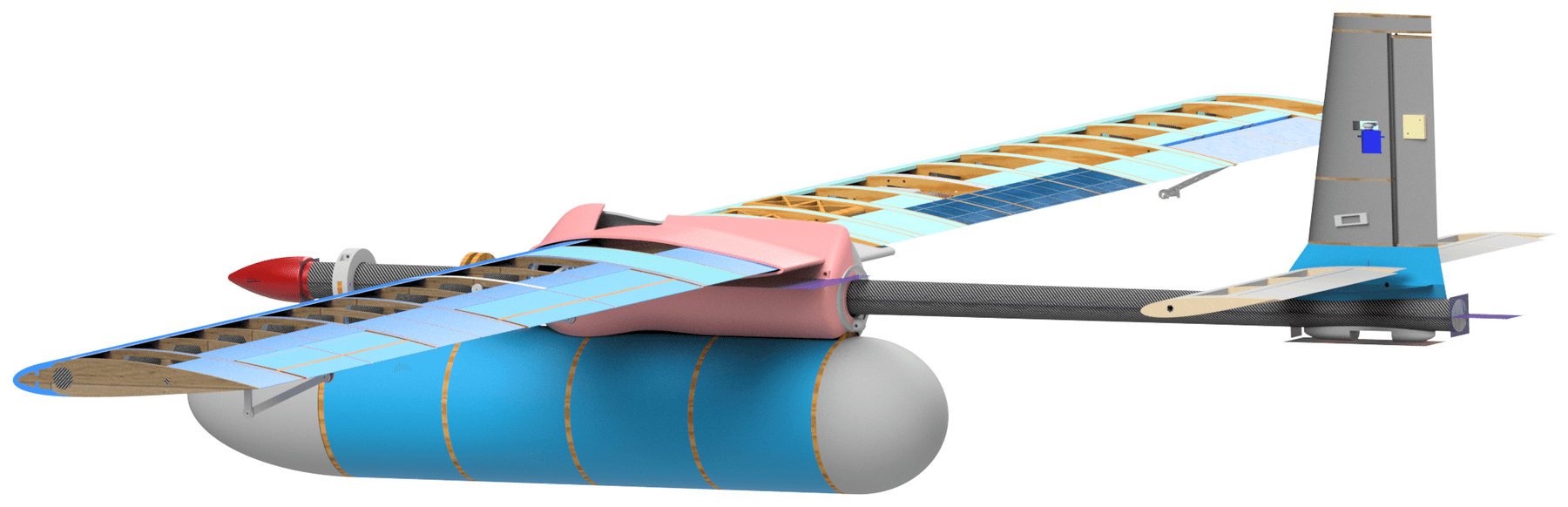
Isometric CAD render of the complete blood-transport UAV

03 · Design · Structures · Test

Blood-Transport UAV

Design, manufacture and testing of the structural joints and aerodynamic fairings for a complete flight vehicle: ten additively manufactured parts, a load test past ultimate, and a failure analysis of the path nobody modelled.

813 N
Survived past ultimate load
1.95
Governing reserve factor
1,011 g
Subassembly mass

Read the case study

02 / Engineering profile

How the projects are put together

Each project combines at least two of analytical theory, numerical simulation, physical manufacture and experiment. The useful engineering tends to appear where they disagree: an XFoil polar against a wind-tunnel run, a laminate theory prediction against a tensile test, a CFD reaction force against a hand calculation.

Every repository documents its own methods, verification, limitations and data provenance, including the results that were inconclusive and the failure mode nobody predicted.

Simulation & Analysis

  • ANSYS Fluent, CFX & Mechanical
  • RANS turbulence modelling (k-ε, SST k-ω)
  • Rotating reference frames & periodic domains
  • One-way fluid-structure interaction
  • Abaqus 3D ply-by-ply finite elements
  • Verification & validation: Richardson / GCI, y⁺ audits, hand-calculation cross-checks

Structures & Composites

  • Classical laminate theory & ABD matrices
  • Hashin failure criteria, O'Brien energy release rates
  • Free-edge interlaminar stress analysis
  • Thin-ply laminate manufacture (layup, bagging, autoclave)
  • Tensile testing with video-gauge strain measurement
  • SEM fractography

Programming & Computational Methods

  • Python (NumPy, SciPy, Matplotlib, pytest)
  • MATLAB analysis pipelines
  • Automated test suites asserting physical properties
  • Reproducible, provenance-tracked analysis
  • C++ with SYCL/DPC++ & FPGA optimisation (in progress)

Design & Experimentation

  • Autodesk Inventor, including a 535-file full-vehicle assembly
  • XFoil aerofoil analysis
  • FDM additive manufacture for flight parts
  • Wind-tunnel testing with a six-component balance
  • Ultimate load testing & failure investigation
  • Requirements traceability & concept downselection

03 / Education & current work

MSc Advanced Computational Methods for Aeronautics, Flow Management and Fluid-Structure Interaction

Imperial College London · Incoming

BEng Aerospace Engineering

University of Bristol

Final-year research project on thin-ply composite laminates, supervised by Prof. Michael R. Wisnom.

In progress

FPGA clustering acceleration

Performance engineering and FPGA-oriented optimisation of clustering algorithms in C++ with SYCL/DPC++ and Alpaka, covering loop-carried dependencies, irregular memory access and on-chip memory trade-offs. An independent demonstrator, not yet published.

More on how I work, and what each project taught me, on the about page.